Magento 2 Development Services

Magento is the platform you choose when your eCommerce business is serious about scale. We've been building Magento stores for over 12 years — starting back in version 1.4 — and with Magento 2 (Adobe Commerce), we help merchants handle complex catalogs, multi-store setups, and the kind of traffic spikes that break lesser platforms.

Discuss Your Project
200+
Magento Stores Built
45+
Certified Magento Devs
$500M+
Client Revenue Processed
2012
Working with Magento Since

Trusted by Leading Brands

What Our Clients Say

What We Do with Magento

From fresh builds to rescuing underperforming stores — here's our Magento work.

Custom Store Development

New Magento 2 stores built to your business requirements. Custom themes, product configurators, B2B portals, and checkout flows optimized for conversion.

Extension Development

Custom Magento 2 modules for functionality that doesn't exist off the shelf. Payment integrations, shipping calculators, ERP connectors, and custom business logic.

Performance Optimization

Slow Magento store? We optimize everything — Varnish caching, Elasticsearch tuning, database queries, full-page cache, CDN configuration. Typical improvement: 3-5x faster.

Migration to Magento 2

Still on Magento 1? It's end-of-life and a security risk. We migrate your catalog, customers, orders, and customizations to Magento 2 with minimal downtime.

Third-Party Integrations

Connecting Magento to ERPs (SAP, <a href="/odoo-development/">Odoo</a>, NetSuite), PIM systems, marketing automation, payment gateways, and shipping carriers.

Support & Maintenance

Security patches, version upgrades, bug fixes, and ongoing development. Keeping your Magento store secure, fast, and up to date.

Magento Areas We Know Inside Out

200+ stores give you deep pattern recognition.

B2B Commerce

Custom quote workflows, negotiated pricing, company accounts, quick order forms, and punchout catalog integration. Magento's B2B features are powerful but need expert configuration.

B2B Company Accounts Quote System Requisition Lists

Multi-Store & International

Running multiple stores, brands, or regions from one Magento instance. Separate catalogs, currencies, tax rules, and shipping methods — all managed centrally.

Multi-Store Multi-Currency Tax Rules Localization

Performance at Scale

Magento handling 100K+ SKUs, 50K daily visitors, and flash sale traffic. Varnish, Redis, Elasticsearch, and architecture that doesn't buckle under load.

Varnish Redis Elasticsearch CDN Load Balancing

Why Merchants Choose Us for Magento

Adobe Certified Team

Security Patch Experts

Performance Obsessed

Clean Extension Code

E-Commerce Strategists

24/7 Support Available

The Real Talk About Magento

Magento is not a platform you "set up." It's a platform you invest in. The merchants who succeed with Magento treat it as a core business asset, not just a website.

When Magento makes sense

Large catalogs (10K+ SKUs), complex business logic (B2B pricing, configurable products), multi-store operations, and serious growth plans. If you're doing $1M+ in annual online revenue and need flexibility that Shopify can't provide — Magento is your platform.

When it doesn't

If you have 50 products and straightforward pricing, Magento is overkill. Shopify or WooCommerce will serve you better at a fraction of the cost. We'll tell you this upfront.

The biggest cost in Magento isn't the software. It's hosting and development. Budget for both, or you'll end up with a slow, frustrating store.

Our Magento philosophy

  • Performance first — Every feature gets a performance review before it ships
  • Upgrade-safe code — Custom modules that don't break when Magento updates
  • Conversion focus — Pretty design means nothing if the checkout is broken
  • Monitoring — New Relic, error tracking, and uptime monitoring from day one

Fashion Retailer — 100K+ Daily Visitors

A fashion brand with 25K SKUs, complex configurable products (size × color × length), and frequent flash sales. We built a Magento 2 store with Varnish caching, Elasticsearch-powered faceted search, and a custom checkout flow. Page load times under 2 seconds even during 10x traffic spikes.

Fashion Retailer — 100K+ Daily Visitors

B2B Distributor — Custom Pricing Engine

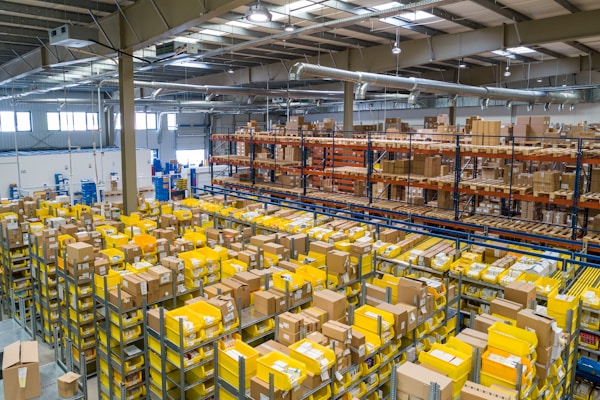
A building materials distributor with 5,000 business customers, each with negotiated pricing. We built custom Magento modules for tiered pricing, quote management, and ERP integration with SAP. Order volume doubled in the first year after launch.
B2B Distributor — Custom Pricing Engine

Multi-Brand E-Commerce — 5 Stores, One Admin

A consumer goods company running 5 different brands from a single Magento instance. Separate storefronts, shared inventory, consolidated reporting, and a unified order management system. Reduced operational overhead by 40%.

Multi-Brand E-Commerce — 5 Stores, One Admin

Magento 2 Development FAQs

Open Source is genuinely capable for most B2C stores. Adobe Commerce (paid) adds B2B features, staging/preview, advanced segmentation, and cloud hosting. We recommend based on your specific feature needs, not our preference.
A custom Magento 2 store typically ranges from $25K for a basic setup to $200K+ for complex B2B implementations. Hosting adds $200-$2,000/month depending on traffic. We provide detailed quotes after understanding your requirements.
Usually: poor hosting, missing Varnish cache, unoptimized extensions, database bloat, or bad code. We offer performance audits that identify the specific bottlenecks and fix them. Most stores see 3-5x improvement.
Yes. Magento 1 is end-of-life. We migrate catalogs, customers, orders, URL structures, and custom functionality to Magento 2. The process typically takes 8-16 weeks depending on complexity.
Shopify is simpler and cheaper for straightforward stores. Magento gives you unlimited customization, no transaction fees, and full data ownership. Choose Magento when you need B2B features, complex catalogs, or custom business logic.
We help you set up and optimize hosting on AWS, DigitalOcean, or recommend managed Magento hosts. We configure the full stack — Nginx, Varnish, Redis, Elasticsearch, and PHP-FPM — tuned for your specific traffic patterns.
Magento 2 development services cover any build, customization, integration, or migration work on the Magento 2.x platform (current stable: 2.4.7, released April 2024). The "Magento 2.0" phrasing — still common in search queries — typically refers to the entire Magento 2 line, which started with 2.0 in late 2015 and continues through 2.4.x today. Modern Magento 2 development specifically means: building on Magento 2.4.x with PHP 8.3, MariaDB/MySQL 8, Elasticsearch 8, the Hyvä frontend theme (or PWA Studio for headless), and Composer-managed modules. If you are still on Magento 2.0 through 2.3, those versions are end-of-life — security patches have stopped — and an upgrade to 2.4.x is the primary recommendation before any new development work.
A Magento 2 development company delivers a broader portfolio than just storefront builds. Common Magento development solutions: (1) Full Magento 2 store development — design, frontend (Hyvä / PWA Studio / Luma), checkout flow, payment gateways, shipping integrations. (2) Magento 1 → Magento 2 migration — data, design, custom code, URL preservation, SEO continuity. (3) Custom extension and module development — Marketplace-ready or private-use extensions. (4) Performance optimization — Varnish, Redis, Elasticsearch tuning, image optimization, Core Web Vitals work. (5) ERP/CRM integration — Odoo, ERPNext, NetSuite, SAP, Salesforce. (6) B2B Magento development — company accounts, quote workflows, customer-segment pricing. (7) Support and managed services. Region-specific teams (e.g. Magento development in St. Louis, Troy MI, Norway, or India) typically combine local account management with offshore development for cost efficiency.
There are absolute lower bounds on what a real Magento 2 development engagement costs — Magento is a complex platform and cheap rates usually mean cut corners. Realistic 2026 ranges: $25-40/hr for offshore developers in India / Pakistan / Bangladesh for routine work; $50-80/hr for senior offshore developers and Adobe-certified experts; $100-200/hr for US/EU agencies. The trade-offs at the cheap end: (a) likely no Adobe Certification on the team, (b) Composer is sometimes bypassed in favor of copying files into app/code, (c) tests are skipped, (d) security patches lag. If budget is tight, the safer approach is: hire a senior Adobe-certified architect at the higher rate for design + code review, and pair them with mid-level developers at the lower rate for implementation. Pure-cheap pure-junior teams typically cost more in the long run because of rework and security incidents.
Yes. Magento 2 B2B development is one of our deeper specializations. Adobe Commerce ships with native B2B features (company accounts, shared catalogs, requisition lists, quotes) which is the simplest path. For Magento Open Source, we build the same capabilities via custom extensions: (1) Company accounts with role-based permissions (admin user, purchaser, approver) and approval workflows for orders above a threshold. (2) Customer-segment pricing — different price tiers per company or per customer group, with bulk-discount rules. (3) Quote workflow — buyer requests a quote, sales rep negotiates and counter-offers, buyer accepts, the quote converts to a real order with the negotiated price. (4) Net-30 / Net-60 payment terms — orders placed without immediate payment, invoiced on a schedule. (5) MOQ and bulk-order forms. (6) Catalog visibility per company. A full Magento 2 B2B store build typically takes 14-22 weeks for Open Source; Adobe Commerce shortens this by 6-10 weeks because the native B2B module covers most of (1)-(3).
Yes — Magento flash sales (think Black Friday, Cyber Monday, regional Diwali / Singles Day pushes) are a known stress test for Magento 2 stores. We deliver flash-sale readiness in three layers: (1) Infrastructure — autoscale the application servers, increase Varnish cache pool, scale Redis cluster, MariaDB read replicas, CDN cache warming for product/category pages. (2) Application — full-page-cache hit rate above 95% for anonymous traffic, queue-based order processing to absorb spikes without choking the database, inventory locks that prevent overselling when 1000+ shoppers hit the same SKU. (3) Feature — countdown timers, banner-driven promo display, customer-segment-specific flash sales, post-sale recovery (cart abandonment for visitors who hit but did not check out). We typically run a load test simulating 2-3× expected peak the week before the sale, then a final test 24 hours before. Stores running Adobe Commerce on Magento Cloud have additional autoscale levers worth using.
The "best Magento 2 development company" depends on what you are building, but these signals separate top-tier from average: (1) Adobe Certified Developers on staff — at minimum one Adobe Certified Expert architect on every project. Ask for certification IDs and verify them. (2) Public Marketplace presence — extensions in the Magento Marketplace with positive reviews and active update cadence. (3) Composer-first workflow — code installed via composer.json, no copying into app/code. (4) Test coverage — PHPUnit and MFTF (Magento Functional Testing Framework) run in CI on every PR. (5) Hyvä Theme experience — the dominant 2026 frontend; the Luma theme is being deprecated. (6) PWA / headless experience if relevant to you. (7) B2B / Adobe Commerce experience for enterprise builds. (8) Performance case studies with TTFB, LCP, and conversion-rate improvements. (9) Code review process for your in-house developers, not just isolated delivery. (10) Long-term clients — a 5+ year relationship with a flagship client is a stronger signal than 50 short-term projects. Always ask for two reference calls before signing.

Need a Magento Expert?

Whether it's a new store, a performance fix, or a migration — let's talk about your e-commerce goals.

Book a Free Consultation